


Murasaki Shikibu
"Dünyanın ilk ve en büyük romanlarından birinin zarif, berrak bir çevirisi."--Alan Tansman, Kaliforniya Üniversitesi, Berkeley. Heian Dönemi'nde (MS 794-1185) soyluların orta kademelerinde dünyaya gelen Murasaki Shikibu, dünyanın ilk romanı olarak kabul edilen Genji'nin Hikayesi'ni on birinci yüzyılın başlarında yazdı. Kapsamlı, sürükleyici ve etik kaygılar ile estetik ideallerin tasvirinde sofistike olan Murasaki'nin hikayesi, Japonya'nın dikkat çekici sanatsal başarı tarihi içinde merkezi bir yer edinmiş ve artık dünya edebiyatının bir başyapıtı olarak kabul edilmektedir. Genji'nin Hikayesi, imparatorluk sarayı kültürünün tasvirinde kendi deneyimleriyle aynı anda hem uyum sağlayan hem de onlara meydan okuyan insan deneyiminin zengin karmaşıklığını keşfedecek çağdaş okurlar için akıcı yeni bir çeviriyle sunulmaktadır. Washburn, akıcı bir okuma için iç monologları italik yazıyla belirginleştiriyor, erişilebilirlik ve netlik için bazı açıklamalar ekliyor ve şiirleri orijinalinin vezinsel karşılıklarını oluşturmak üzere İngilizceye üçlü dizeler halinde çeviriyor
Wu Cheng'en, Arthur Waley, David Kherdian, Hu Shih
The fanciful adventures of a Tang Dynasty priest, Sanzang, and his three disciples, Monkey, Pig, and Friar Sand, as they search for a Buddhist Sutra.
Abolqasem Ferdowsi
Among the great works of world literature, perhaps one of the least familiar to English readers is the Shahnameh: ThePersian Book of Kings, the national epic of Persia. This prodigious narrative, composed by the poet Ferdowsi between the years 980 and 1010, tells the story of pre- Islamic Iran, beginning in the mythic time of Creation and continuing forward to the Arab invasion in the seventh century. As a window on the world, Shahnameh belongs in the company of such literary masterpieces as Dante’s Divine Comedy, the plays of Shakespeare, the epics of Homer— classics whose reach and range bring whole cultures into view. In its pages are unforgettable moments of national triumph and failure, human courage and cruelty, blissful love and bitter grief. In tracing the roots of Iran, Shahnameh initially draws on the depths of legend and then carries its story into historical times, when ancient Persia was swept into an expanding Islamic empire. Now Dick Davis, the greatest modern translator of Persian poetry, has revisited that poem, turning the finest stories of Ferdowsi’s original into an elegant combination of prose and verse. For the first time in English, in the most complete form possible, readers can experience Shahnameh in the same way that Iranian storytellers have lovingly conveyed it in Persian for the past thousand years.
Andrew George, Anonymous
Gilgamesh, King of Uruk, and his companion Enkidu are the only heroes to have survived from the ancient literature of Babylon, immortalized in this epic poem that dates back to the 3rd millennium BC. Together they journey to the Spring of Youth, defeat the Bull of Heaven and slay the monster Humbaba. When Enkidu dies, Gilgamesh's grief and fear of death are such that they lead him to undertake a quest for eternal life. A timeless tale of morality, tragedy and pure adventure, The Epic of Gilgamesh is a landmark literary exploration of man's search for immortality.
Geoffrey Chaucer
About this book: Geoffey Chaucer (c.1340-1400) was one of the finest storytellers in the English language, as well as being a great poet and an accomplished prose writer. The Canterbury Tales, although incomplete at the time of Chaucer's death, is generally regarded as his greatest work. The Canterbury Tales tells the story of 30 pilgrims who meet by chance at the Tabard Inn in Southwark, London and journey together to the shrine of St. Thomas Becket in Canterbury cathedral. To pass the time along the way, they tell stories to one another. The Tales themselves range from the exemplary saints' lives told by the nuns, to the bawdy, comic tales of the miller and the reeve, always shot through with Chaucer's cunning wit and dry humour. Chaucer leaves his readers with the impression that the whole of medieval society has passed before their eyes. This new transcription and edition is taken from British Library MS Harley 7334, a beautifully decorated, volume produced within ten years of Chaucer's death. The aim of the present edition, with its 'on-page' notes and glosses, is to enable readers with little or no previous experience of medieval English to read and enjoy this landmark in Eng

Mikhail Bulgakov
Faust ve Pontius Pilate'nin hikayelerinin cüretkar bir yeniden yazımı olan Usta ve Margarita, modern Rus edebiyatının temel klasiklerinden biri olarak kabul edilir. Romanın 1930'lu yıllardaki Sovyet yaşamına dair vizyonu o kadar acımasızca doğrudur ki, yazarının yaşamı boyunca yayınlanamamış ve ancak 1960'larda sansürlü bir baskıyla ortaya çıkabilmiştir. Gerçekleri o kadar kalıcıdır ki, dili günlük Rus konuşma dilinin bir parçası haline gelmiştir. Sıcak bir ilkbahar günü, şeytan; yanında güzel, çıplak bir cadı ve satranç ile vodkayı seven dev, konuşan siyah bir kedinin de bulunduğu bir alayla Moskova'ya varır. Ziyaretçiler, ne Tanrı'ya ne de Şeytan'a inanmayı reddeden bir şehirde hızla kargaşa yaratırlar. Ancak aynı zamanda iki mutsuz Moskovalıya huzur getirirler: biri, İsa ve Pontius Pilate hakkında bir roman yazma cesaretini gösterdiği için hedefe konulan bir yazar olan Usta; diğeri ise Usta'yı o kadar derin bir şekilde seven ve onun için kelimenin tam anlamıyla cehenneme gitmeye razı olan Margarita'dır. Ortaya çıkan şey, tükenmez bir enerjiye, mizaca ve felsefi derinliğe sahip bir romandır.

Stanisław Lem, Steve Cox, Joanna Kilmartin
The cult-classic by Stanislaw Lem that spawned the movie is now available for your Kindle! Until now the only English edition was a 1970 version, which was translated from French and which Lem himself described as a "poor translation." This wonderful new English translation (by Bill Johnston) of Lem's classic Solaris is a must-have for fans of Lem's classic novel. Telling of humanity's encounter with an alien intelligence on the planet Solaris, the 1961 novel is a cult classic, exploring the ultimate futility of attempting to communicate with extra-terrestrial life. When Kris Kelvin arrives at the planet Solaris to study the ocean that covers its surface, he finds a painful, hitherto unconscious memory embodied in the living physical likeness of a long-dead lover. Others examining the planet, Kelvin learns, are plagued with their own repressed and newly corporeal memories. The Solaris ocean may be a massive brain that creates these incarnate memories, though its purpose in doing so is unknown, forcing the scientists to shift the focus of their quest and wonder if they can truly understand the universe without first understanding what lies within their hearts.
Ursula K. Le Guin
One of the very best must-read novels of all time - with a new introduction by Roddy Doyle 'A well told tale signifying a good deal; one to be read again and again' THE TIMES 'The book I wish I had written ... It's so far away from my own imagination, I'd love to sit at my desk one day and discover that I could think and write like Ursula Le Guin' Roddy Doyle 'Le Guin is a writer of phenomenal power' OBSERVER 'There was a wall. It did not look important - even a child could climb it. But the idea was real. Like all walls it was ambiguous, two-faced. What was inside it and what was outside it depended upon which side of it you were on...' Shevek is brilliant scientist who is attempting to find a new theory of time - but there are those who are jealous of his work, and will do anything to block him. So he leaves his homeland, hoping to find a place of more liberty and tolerance. Initially feted, Shevek soon finds himself being used as a pawn in a deadly political game. With powerful themes of freedom, society and the natural world's influence on competition and co-operation, THE DISPOSSESSED is a true classic of the 20th century.

Toni Morrison, A.S. Byatt
Sethe has too many memories of Sweet Home, the beautiful farm where so many hideous things happened. And Sethe’s new home is haunted by the ghost of her baby, who died nameless and whose tombstone is engraved with a single word: Beloved.

José Saramago, Giovanni Pontiero, زهره افتخاری
A city is hit by an epidemic of "white blindness" which spares no one. Authorities confine the blind to an empty mental hospital, but there the criminal element holds everyone captive, stealing food rations and raping women. There is one eyewitness to this nightmare who guides seven strangers—among them a boy with no mother, a girl with dark glasses, a dog of tears—through the barren streets, and the procession becomes as uncanny as the surroundings are harrowing. A magnificent parable of loss and disorientation, Blindness has swept the reading public with its powerful portrayal of our worst appetites and weaknesses—and humanity's ultimately exhilarating spirit.

Umberto Eco, William Weaver
The year is 1327. Franciscans in a wealthy Italian abbey are suspected of heresy, and Brother William of Baskerville arrives to investigate. When his delicate mission is suddenly overshadowed by seven bizarre deaths, Brother William turns detective. His tools are the logic of Aristotle, the theology of Aquinas, the empirical insights of Roger Bacon - all sharpened to a glistening edge by wry humor and a ferocious curiosity. He collects evidence, deciphers secret symbols and coded manuscripts, and digs into the eerie labyrinth of the abbey, where "the most interesting things happen at night."

Simone de Beauvoir

Simone de Beauvoir, H.M. Parshley, Deirdre Bair
The classic manifesto of the liberated woman, this book explores every facet of a woman's life.
Thomas S. Kuhn
"One of the most influential books of the 20th century," the landmark study in the history of science with a new introduction by philosopher Ian Hacking ( Guardian, UK). First published in 1962, Thomas Kuhn's The Structure of Scientific Revolutions "reshaped our understanding of the scientific enterprise and human inquiry in general." In it, he challenged long-standing assumptions about scientific progress, arguing that transformative ideas don't arise from the gradual process of experimentation and data accumulation, but instead occur outside of "normal science." Though Kuhn was writing when physics ruled the sciences, his ideas on how scientific revolutions bring order to the anomalies that amass over time in research experiments are still instructive in today's biotech age ( Science). This new edition of Kuhn's essential work includes an insightful introduction by Ian Hacking, which clarifies terms popularized by Kuhn, including "paradigm" and "incommensurability," and applies Kuhn's ideas to the science of today. Usefully keyed to the separate sections of the book, Hacking's introduction provides important background information as well as a contemporary context. This newly designed edition also includes an expanded and updated index.

Carl Sagan, Paulo Geiger
This book is about science in its broadest human context, how science and civilization grew up together. It is the story of our long journey of discovery and the forces and individuals who helped to shape modern science, including Democritus, Hypatia, Kepler, Newton, Huygens, Champollion, Lowell and Humason. The book also explores spacecraft missions of discovery of the nearby planets, the research in the Library of ancient Alexandria, the human brain, Egyptian hieroglyphics, the origin of life, the death of the Sun, the evolution of galaxies and the origins of matter, suns and worlds. The author retraces the fifteen billion years of cosmic evolution that have transformed matter into life and consciousness, enabling the cosmos to wonder about itself. He considers the latest findings on life elsewhere and how we might communicate with the beings of other worlds. ~ WorldCat.org
Jared Diamond
An epic detective story that offers a gripping expose on why the world is so unequal. Professor Jared Diamond traveled the globe for over 30 years trying to answer this question.

Marcel Proust
Through seven volumes, the narrator of In Search of Lost Time recounts his memories as they occur to him. An innocuous treat—say, a small cake paired with a cup of tea—may awaken memories buried deep within the narrator’s mind; memories cause more memories to surface. Like the cathedral builders of old, a whole life and the world around it are thus formed anew, slowly and methodically, by uniting pieces of the narrator’s life for the sake of the reader. This recollection takes us through the narrator’s childhood, weaving the social web his family finds itself entangled in, his first crush and coming of age, his gradual appreciation of art while finding his place into society, his hurtful obsession over a young woman, and, ultimately, the consolation that what had been lost in his youth can be regained. Firmly grounded in Modernism, In Search of Lost Time is not a work about memories but memory. By leading the reader in circles, sometimes on a glorious wild goose chase, Proust holds a mirror in front of the reader, sending us back to our own memories and experiences, no matter how pleasant or uncomfortable. By its very nature, it’s a difficult exercise about one of the defining features of humanity: our ability to manipulate time by recalling and, often, recreating it. C. K. Scott Moncrieff’s English translation is as highly regarded as the novel itself. Moncrieff used Remembrance of Things Past as the title, which was not a translation of the French title but a quote from a Shakespearean sonnet; this edition uses the translated title that the work is best known by in English. Just as Proust passed away before finalizing the last three volumes, so Moncrieff passed away before completing his translation; the final volume was translated by his (and Proust’s) friend Sydney Schiff, under the pseudonym Stephen Hudson. Only the first four translated volumes are currently available in the public domain. The remaining three will be added to this edition as their copyrights expire over the next few years.

James Joyce
On June 16, 1904, in Dublin, Ireland, the day is distinguished by its utter normality. Two characters, Stephen Dedalus and Leopold Bloom, go about their separate business, crossing paths with a gallery of indelible Dubliners.
Dante Alighieri
Described variously as the greatest poem of the European Middle Ages and, because of Dante's evangelical purpose, the 'fifth Gospel', the "Divine Comedy" is central to Western culture. The poem is a spiritual autobiography in journey form -- the poet travels from the dark circles of the Inferno, up the mountain of Purgatory, where Virgil, his guide, leaves him to encounter Beatrice in the Earthly Paradise. Dante conceived the poem a the new epic of Christendom, and he creates a world in which reason and faith have transformed moral and social chaos into order. Charles Sisson's blank verse translation is remarkable for its lucidity and vigor, and the introduction, diagrams, maps, and notes by David Higgins provide the reader with invaluable guidance. -- From publisher's description.

Johann Wolfgang von Goethe
A complete annotated translation of Goethe's "Faust," plus extensive interpretive notes, "Faust" illustrations and other visual sources used by Goethe, several pieces of Goethe's correspondence and commentary, eleven contemporary reviews by well-known writers, and ten modern pieces of criticism; also includes a Goethe chronology and selected bibliography.
Homer
In 2002, the University of Michigan Press published Rodney Merrill's translation of Homer's Odyssey, an interpretation of the classic that was unique in employing the meter of Homer's original. Praising Merrill's translation of the Odyssey, Gregory Nagy of Harvard wrote, Merrill's fine ear for the sound of ancient Greek makes the experience of reading his Homer the nearest thing in English to actually hearing Homer. The translator's English renders most faithfully the poet's ancient Greek--not only the words and meaning but even the voice. Merrill has now produced an edition of Homer's Iliad, following the same approach. This form of rendering is particularly relevant to the Iliad, producing a strong musical setting that many elements of the narrative require to come truly to life. Most notable are the many battle scenes, to which the strong meter gives an impetus embodying and making credible the war-lust in the deeds of the combatants. --University of Michigan Press.
Homer, Samuel Butler
This epic poem follows Odysseus, one of the Greek leaders that brought an end to the ten-year-long Trojan war. Longing for home, he travels across the Mediterranean Sea to return to his kingdom in Ithaca; unfortunately, our hero manages to anger Neptune, the god of the sea, making his trip home agonizingly slow and extremely dangerous. While Ulysses is trying to return home, his family in Ithaca is also in danger. Suitors have traveled to the home of Ulysses to marry his wife, Penelope, believing that her husband did not survive the war. These men are willing to kill anyone who stands in their way. The Odyssey is one of the oldest works of Western literature, dating back to classical antiquity. Homer’s epic poem belongs in a collection called the Epic Cycle, which includes the Iliad. It was originally written in ancient Greek, utilizing a dactylic hexameter rhyme scheme.

Aristotle
An detailed examination of what the best life might be for human beings. In order to anwer this question, Aristotle finds he also has to examine what virtue itself is and all of the various virtues that might make up the best life.
Marcus Aurelius
Emperor of Rome from 161 to 180 A.D., Marcus Aurelius is considered one of history's "philosopher kings," and his Meditations were perhaps his most lasting legacy. Never meant to be published, Marcus' writings on Stoicism, life, and leadership were the personal notes he used to make sense of the world. They remain a wonderful insight into the mind of a man who ruled history's most revered empire at the age of 40 and provide remarkably practical advice for everyday life (from John Coleman, HBR Blog Network)
Sabahattin Ali
Madonna in a Fur Coat – Sabahattin Ali A timeless novel about love, loneliness, and the hidden depths of the human soul. Set between Berlin and Turkey, the story follows Raif Efendi and Maria Puder, whose encounter transforms their lives. With subtle psychological insight and emotional depth, Sabahattin Ali explores the fragility of human relationships and the unspoken feelings that shape our lives. A masterpiece of Turkish literature that continues to touch readers around the world.
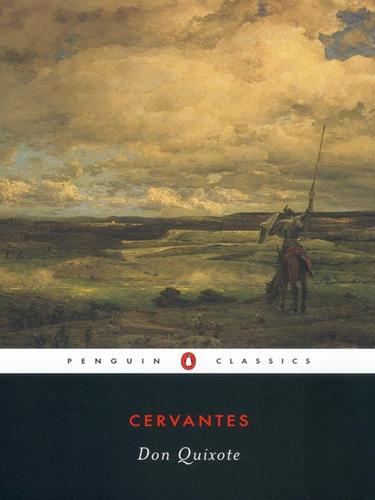
Miguel de Cervantes Saavedra, Roberto González Echevarría
Don Quixote has become so entranced by reading chivalric romances that he determines to become a knight-errant himself. In the company of his faithful squire, Sancho Panza, his exploits blossom in all sorts of wonderful ways. While Quixote's fancy often leads him astray—he tilts at windmills, imagining them to be giants—Sancho acquires cunning and a certain sagacity. Sane madman and wise fool, they roam the world together, and together they have haunted readers' imaginations for nearly four hundred years. With its experimental form and literary playfulness, Don Quixote has been generally recognized as the first modern novel. The book has been enormously influential on a host of writers, from Fielding and Sterne to Flaubert, Dickens, Melville, and Faulkner, who reread it once a year, "just as some people read the Bible."

Franz Kafka, Michael Hofmann
Franz Kafka’s The Metamorphosis begins with one of the most shocking openings in literature: traveling salesman Gregor Samsa wakes up to discover he has turned into a giant insect. But this is not just a story of absurd metamorphosis—it is a deeply human tale of alienation, family obligation, and what happens when someone is no longer “useful” to society. As Gregor’s family struggles to cope with his bizarre condition, Kafka explores powerful themes of dependence, dignity, and the quiet cruelty of social expectations. Both absurd and painfully realistic, this modern classic strikes a unique balance of dark humor and existential insight. For fans of George Orwell, Albert Camus, and modernist fiction that blurs the line between the strange and the familiar. Whether you're reading it for the first time or rediscovering it with fresh eyes, The Metamorphosis is a novella that stays with you—long after you’ve turned the final page.
Stephen Hawking
1 NEW YORK TIMES BESTSELLER A landmark volume in science writing by one of the great minds of our time, Stephen Hawking’s book explores such profound questions as: How did the universe begin—and what made its start possible? Does time always flow forward? Is the universe unending—or are there boundaries? Are there other dimensions in space? What will happen when it all ends? Told in language we all can understand, A Brief History of Time plunges into the exotic realms of black holes and quarks, of antimatter and “arrows of time,” of the big bang and a bigger God—where the possibilities are wondrous and unexpected. With exciting images and profound imagination, Stephen Hawking brings us closer to the ultimate secrets at the very heart of creation.

F. Scott Fitzgerald, Jesmyn Ward
Extravagant rumors abound of a man named Jay Gatsby who has newly arrived to the coastline of a section of Long Island known colloquially as West Egg. Long into the night, the mysterious Gatsby threw lavish parties at his sprawling estate, but when alone, Gatsby could be found staring longingly at a solitary green light across the dark water. For all Gatsby has attained in his life, that green light represents all that he lost. The greatest story to encapsulate the roaring twenties, The Great Gatsby follows the eventful lives of the denizens from East and West Egg in this timeless classic of American literature.
Fyodor Dostoevsky, Leonard Stanton, James D. Hardy Jr., Sidney Monas, Robin Feuer Miller
Raskolnikov, a destitute and desperate former student, wanders through the slums of St Petersburg and commits a random murder without remorse or regret. He imagines himself to be a great man, a Napoleon: acting for a higher purpose beyond conventional moral law. But as he embarks on a dangerous game of cat-and-mouse with Porfiry, a suspicious detective, Raskolnikov is pursued by the growing voice of his conscience and finds the noose of his own guilt tightening around his neck. Only Sonya, a downtrodden prostitute, can offer the chance of redemption. As the ensuing investigation and trial reveal the true identity of the murderer, Dostoyevsky's dark masterpiece evokes a world where the lines between innocence and corruption, good and evil, blur and everyone's faith in humanity is tested.

Oğuz Atay
John Steinbeck
Steinbeck’s classic novel of the Great Depression is as vivid now as ever. The story focuses on a family of Oklahoma sharecroppers, farmers who work another man’s land for a share of the crops. Driven from their home by drought and poverty they take to the road in a battered old truck and make their way to California to look for work. When they arrive they find hundreds of others like them being forced to work for breadline wages. they begin working as fruit pickers, strike-breakers replacing the people who have been trying to establish a union but their consciences force them to leave.
Leo Tolstoy
At a glittering society party in St. Petersburg in 1805, conversations are dominated by the prospect of war. Terror swiftly engulfs the country as Napoleon’s army marches on Russia, and the lives of three young people are changed forever. The stories of quixotic Pierre, cynical Andrey, and impetuous Natasha interweave with a huge cast, from aristocrats and peasants, to soldiers and Napoleon himself. In War and Peace, Tolstoy entwines grand themes—conflict and love, birth and death, free will and fate—with unforgettable scenes of nineteenth-century Russia, to create a magnificent epic of human life in all its imperfection and grandeur.

Albert Camus, Matthew Ward
Published in 1942 by French author Albert Camus, The Stranger has long been considered a classic of twentieth-century literature. Le Monde ranks it as number one on its "100 Books of the Century" list. Through this story of an ordinary man unwittingly drawn into a senseless murder on a sundrenched Algerian beach, Camus explores what he termed "the nakedness of man faced with the absurd."
Victor Hugo, Christine Donougher, Jillian Tamaki, Robert Tombs
Victor Hugo's tale of injustice, heroism, and love follows the fortunes of Jean Valjean, an escaped convict determined to put his criminal past behind him. But his attempts to become a respected member of the community are constantly put under threat: by his own conscience, when, owing to a case of mistaken identity, another man is arrested in his place; and by the relentless investigations of the dogged Inspector Javert. It is not simply for himself that Valjean must stay free, however, for he has sworn to protect the baby daughter of Fantine, driven to prostitution by poverty.
Antoine de Saint-Exupéry
Translated by Irene Testot-Ferry. The Little Prince is a classic tale of equal appeal to children and adults. On one level it is the story of an airman's discovery, in the desert, of a small boy from another planet - the Little Prince of the title - and his stories of intergalactic travel, while on the other hand it is a thought-provoking allegory of the human condition. First published in 1943, the year before the author's death in action, this translation contains Saint-Exupery's delightful illustrations.
Leo Tolstoy, Richard Pevear, Larissa Volokhonsky, John Bayley
Acclaimed by many as the world's greatest novel, Anna Karenina provides a vast panorama of contemporary life in Russia and of humanity in general. In it Tolstoy uses his intense imaginative insight to create some of the most memorable characters in all of literature. Anna is a sophisticated woman who abandons her empty existence as the wife of Karenin and turns to Count Vronsky to fulfil her passionate nature - with tragic consequences. Levin is a reflection of Tolstoy himself, often expressing the author's own views and convictions. Throughout, Tolstoy points no moral, merely inviting us not to judge but to watch. As Rosemary Edmonds comments, 'He leaves the shifting patterns of the kaleidoscope to bring home the meaning of the brooding words following the title, 'Vengeance is mine, and I will repay.
George Orwell
'The creatures outside looked from pig to man, and from man to pig, and from pig to man again; but already it was impossible to say which was which.' When the downtrodden animals of Manor Farm overthrow their master Mr Jones and take over the farm themselves, they imagine it is the beginning of a life of freedom and equality. Soon the other animals discover that they are not all as equal as they thought, and find themselves hopelessly ensnared as one form of tyranny is replaced with another. Animal Farm was one of George Orwell's most successful books - after its publication Orwell became one of the best-paid writers in England. Though the text continues to play a foundational role in the political education of young people across the world, its allegorical function has become more difficult to decode as the U.S.S.R recedes into the historical distance.

Frank Herbert
Set on the desert planet Arrakis, Dune is the story of the boy Paul Atreides, heir to a noble family tasked with ruling an inhospitable world where the only thing of value is the “spice” melange, a drug capable of extending life and enhancing consciousness. Coveted across the known universe, melange is a prize worth killing for... When House Atreides is betrayed, the destruction of Paul’s family will set the boy on a journey toward a destiny greater than he could ever have imagined. And as he evolves into the mysterious man known as Muad’Dib, he will bring to fruition humankind’s most ancient and unattainable dream.
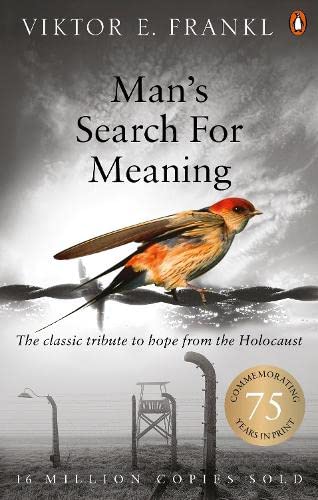
Viktor E. Frankl, Gordon W. Allport
Psychiatrist Viktor Frankl's memoir has riveted generations of readers with its descriptions of life in Nazi death camps and its lessons for spiritual survival. Based on his own experience and the stories of his patients, Frankl argues that we cannot avoid suffering but we can choose how to cope with it, find meaning in it, and move forward with renewed purpose. At the heart of his theory, known as logotherapy, is a conviction that the primary human drive is not pleasure but the pursuit of what we find meaningful. Man's Search for Meaning has become one of the most influential books in America; it continues to inspire us all to find significance in the very act of living.

Fyodor Dostoyevski
How is this book unique? Font adjustments & biography included Unabridged (100% Original content) Illustrated About The Brothers Karamazov by Fyodor Dostoyevsky The Brothers Karamazov (Russian: Бра́тья Карама́зовы, Brat'ya Karamazovy, pronounced [ˈbratʲjə kərɐˈmazəvɨ]), also translated as The Karamazov Brothers, is the final novel by the Russian author Fyodor Dostoyevsky. Dostoyevsky spent nearly two years writing The Brothers Karamazov, which was published as a serial in The Russian Messenger and completed in November 1880. The author died less than four months after its publication. The Brothers Karamazov is a passionate philosophical novel set in 19th century Russia, that enters deeply into the ethical debates of God, free will, and morality. It is a spiritual drama of moral struggles concerning faith, doubt, and reason, set against a modernizing Russia, with a plot which revolves around the subject of patricide. Dostoyevsky composed much of the novel in Staraya Russa, which inspired the main setting. Since its publication, it has been acclaimed as one of the supreme achievements in world literature.
Jean-Jacques Rousseau, Maurice Cranston
Jean-Jacques Rousseau (28 June 1712 – 2 July 1778) was a major Genevan philosopher, writer, and composer of 18th-century Romanticism. His political philosophy heavily influenced the French Revolution, as well as the overall development of modern political, sociological and educational thought. Rousseau was also a successful composer and made important contributions to music as a theorist. During the period of the French Revolution, Rousseau was the most popular of the philosophers among members of the Jacobin Club. Rousseau’s Social Contract is a cornerstone in modern political and social thought and makes a strong case for democratic government and social empowerment.
George Orwell, Peter Hobley Davison, Shepard Fairey
Winston Smith toes the Party line, rewriting history to satisfy the demands of the Ministry of Truth. With each lie he writes, Winston grows to hate the Party that seeks power for its own sake and persecutes those who dare to commit thoughtcrimes. But as he starts to think for himself, Winston can’t escape the fact that Big Brother is always watching... A startling and haunting novel, 1984 creates an imaginary world that is completely convincing from start to finish. No one can deny the novel’s hold on the imaginations of whole generations, or the power of its admonitions—a power that seems to grow, not lessen, with the passage of time.
Benzer Listeler

Dune Okuma Sırası
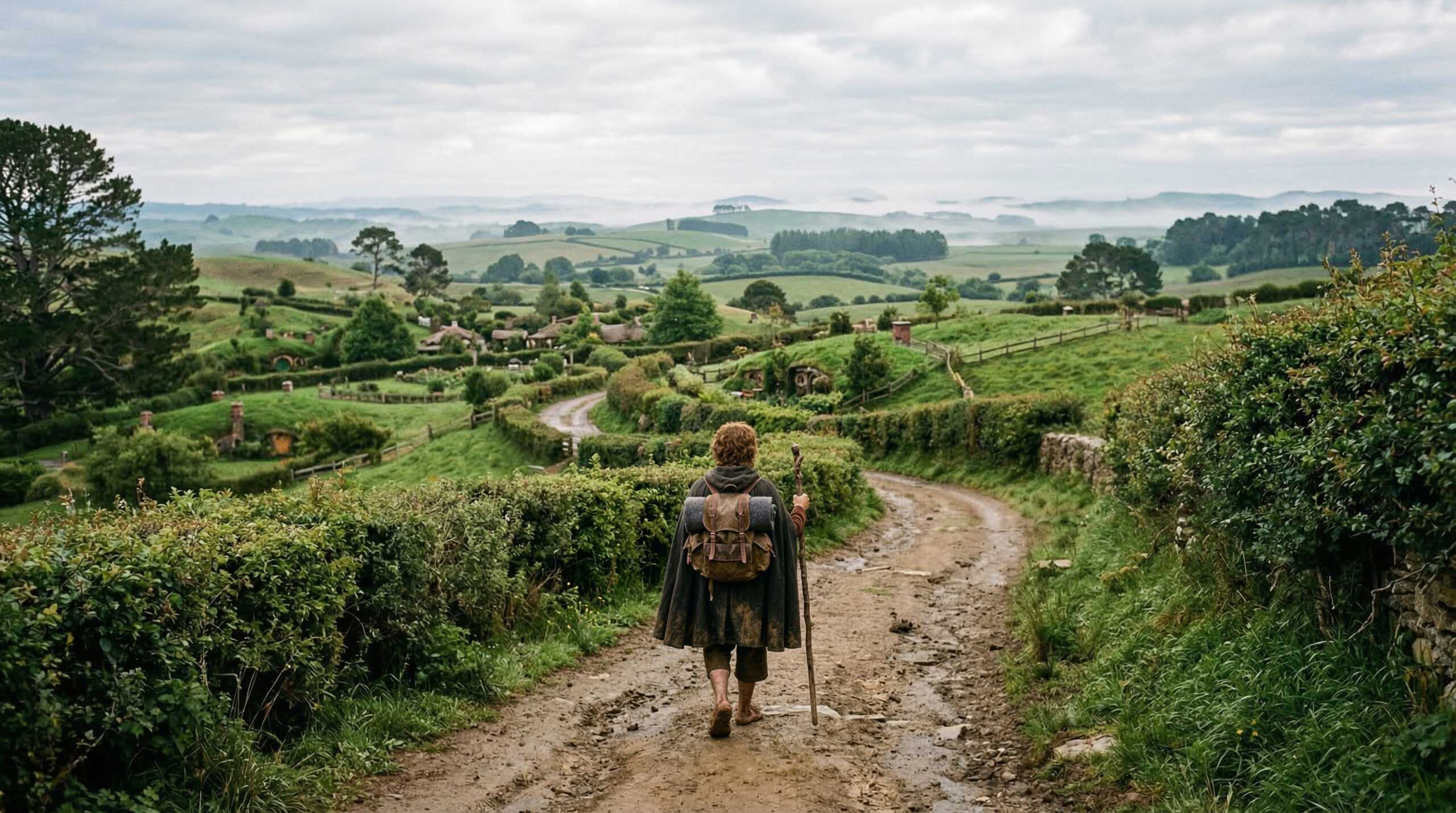
Yüzüklerin Efendisi Kronolojik Okuma Rehberi

Eksiksiz Asimov Evreni: Kronolojik Okuma Sırası
MCU Chronological Order


Star Wars Chronological Order


Kötü Bölümü Olmayan Diziler

Avatar: The last Airbender Chronological Order
2026 Sonbahar Sezonunun Yaklaşan Dizileri


TV Tarihinin En Etkileyici Sona Sahip Dizi Finalleri


TV Tarihinin En Etkileyici Sona Sahip Dizi Finalleri

Alien: Kronolojik Sıra

Karanlık Dosyalar: Son Yılların Dikkat Çeken Polisiye Dizileri

We're scared this year!
