


Isaac Asimov
I, Robot is a fixup novel of science fiction short stories or essays by American writer Isaac Asimov. The stories originally appeared in the American magazines Super Science Stories and Astounding Science Fiction between 1940 and 1950 and were then compiled into a book for stand-alone publication by Gnome Press in 1950, in an initial edition of 5,000 copies. The stories are woven together by a framing narrative in which the fictional Dr. Susan Calvin tells each story to a reporter (who serves as the narrator) in the 21st century. Although the stories can be read separately, they share a theme of the interaction of humans, robots, and morality, and when combined they tell a larger story of Asimov's fictional history of robotics. ---------- Contains: "Introduction" "Robbie" (1940, 1950) "Runaround" (1942) "Reason" (1941) "Catch That Rabbit" (1944) "Liar!" (1941) "Little Lost Robot" (1947) "Escape!" (1945) "Evidence" (1946) "The Evitable Conflict" (1950)

Isaac Asimov
The Caves of Steel follows Detective Elijah Baley as he investigates the murder of a prominent Spacer on an overcrowded Earth, where humans live in vast enclosed cities and robots are deeply integrated into society. Forced to work alongside the advanced humanoid robot R. Daneel Olivaw, Baley must overcome deep social tensions and uncover the truth behind the crime.
Isaac Asimov
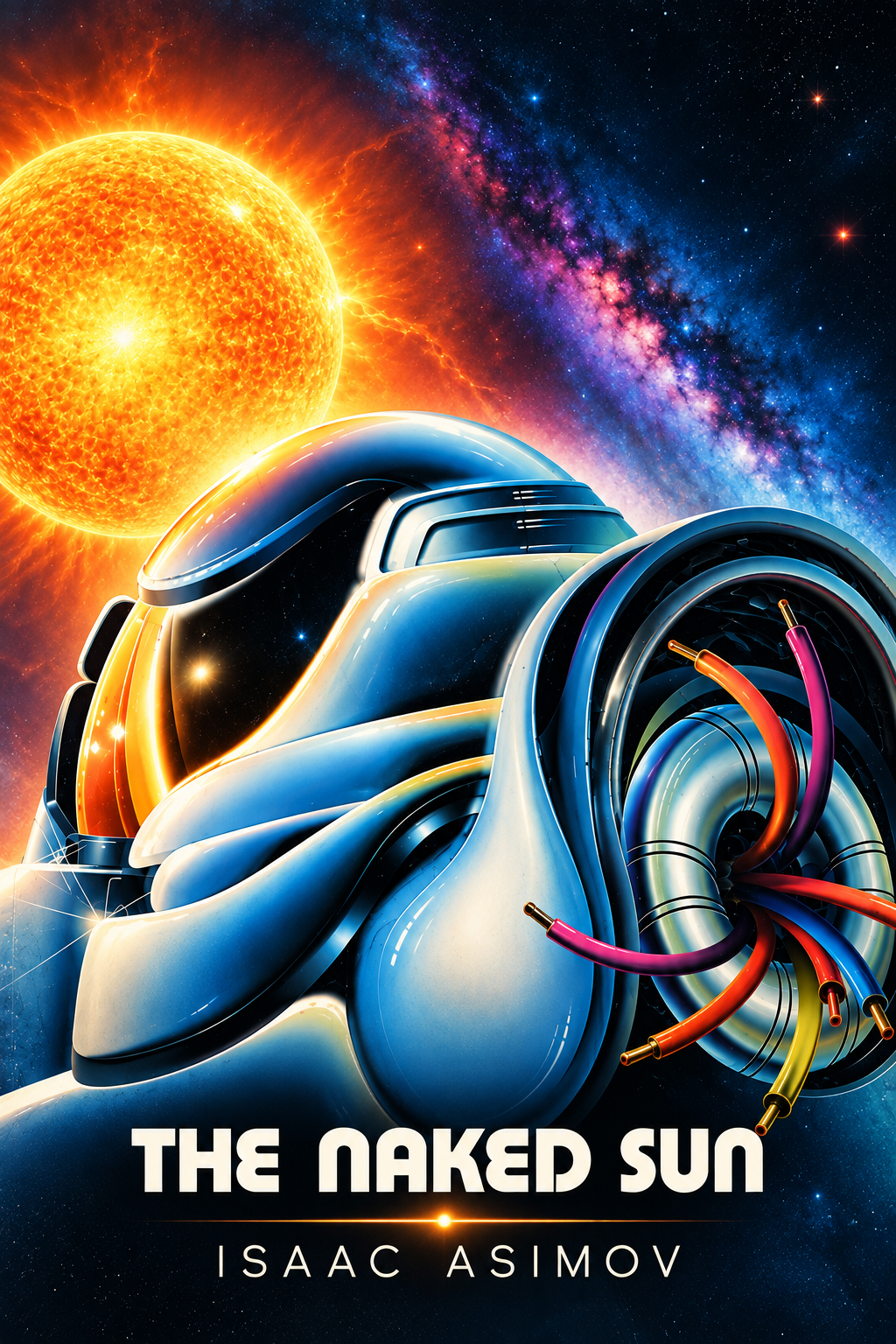
On the planet of Solaria, Spacers live in almost complete isolation, tended by robot servants and disgusted by the thought of human contact. And yet, one of their number has been beaten to death. Incapable of solving the crime, the authorities of the Outer Worlds seek help from Earth, from renowned detective Elijah Baley. Partnered once again with the robot Daneel Olivaw, Baley travels to this strange new world and uncovers a plot that could change the relationship between humans and robots for ever.
Isaac Asimov
A millennium into the future two advances have altered the course of human history: the colonization of the Galaxy and the creation of the positronic brain. Isaac Asimov's Robot novels chronicle the unlikely partnership between a New York City detective and a humanoid robot who must learn to work together. Detective Elijah Baley is called to the Spacer world Aurora to solve a bizarre case of roboticide. The prime suspect is a gifted roboticist who had the means, the motive, and the opportunity to commit the crime. There's only one catch: Baley and his positronic partner, R. Daneel Olivaw, must prove the man innocent. For in a case of political intrigue and love between woman and robot gone tragically wrong, there's more at stake than simple justice. This time Baley's career, his life, and Earth's right to pioneer the Galaxy lie in the delicate balance.

Isaac Asimov
Esta quinta novela de la «Serie de los robots» supone un sensacional hito en la galaxia de ciencia ficción de Asimov y constituye la apasionante continuación del bestseller Los robots del amanecer . En Robots e imperio vemos cómo el futuro del universo corre peligro. Aunque se han debilitado las fuerzas de los siniestros Spacers, el doctor Kelden Amadiro no ha olvidado -ni perdonado- su humillante derrota a manos de Elijah Baley, el adorado héroe de la población terrestre. Amadiro ansía la venganza y está más decidido que nunca a consumar la destrucción del planeta Tierra.
Isaac Asimov
Biron Farrell was young and naïve, but he was growing up fast. A radiation bomb planted in his dorm room changed him from an innocent student at the University of Earth to a marked man, fleeing desperately from an unknown assassin. He soon discovers that, many light-years away, his father, the highly respected Rancher of Widemos, has been murdered. Stunned, grief-stricken, and outraged, Biron is determined to uncover the reasons behind his father’s death, and becomes entangled in an intricate saga of rebellion, political intrigue, and espionage. The mystery takes him deep into space where he finds himself in a relentless struggle with the power-mad despots of Tyrann. Now it is not just a case of life or death for Biron, but a question of freedom for the galaxy.
Isaac Asimov
High above the planet Florinia, the Squires of Sark live in unimaginable wealth and comfort. Down in the eternal spring of the planet, however, the native Florinians labor ceaselessly to produce the precious kyrt that brings prosperity to their Sarkite masters. Rebellion is unthinkable and impossible. Not only do the Florinians no longer have a concept of freedom, any disruption of the vital kyrt trade would cause other planets to rise in protest, ultimately destabilizing trade and resulting in a galactic war. So the Trantorian Empire, whose grand plan is to unite all humanity in peace, prosperity, and freedom, has stood aside and allowed the oppression to continue. Living among the workers of Florinia, Rik is a man without a memory or a past. He has been abducted and brainwashed. Barely able to speak or care for himself when he was found, Rik is widely regarded as a simpleton by the worker community where he lives. But as his memories begin to return, Rik finds himself driven by a cryptic message he is determined to deliver: Everyone on Florinia is doomed . . . the Currents of Space are bringing destruction. But if the planet is evacuated, the power of Sark will end--so some would finish the job and would kill the messenger. The fate of the Galaxy hangs in the balance.
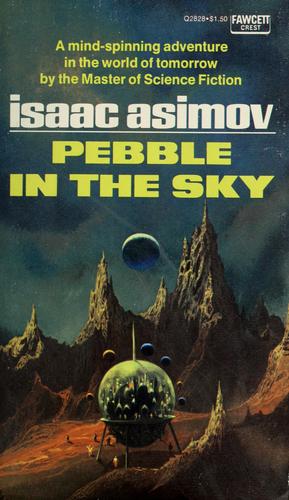
Isaac Asimov
Pebble in the Sky is Asimov's first full length novel. It begins with a retired tailor from the mid-20th Century, who is accidentally pitched forward into the future. By then, Earth has become radioactive and is a low-status part of a vast Galactic Empire. There is both a mystery and a power-struggle, and a lot of debate and human choices. The originality of the S.F. work is the choice of a very ordinary man as the story's protagonist, rather than the more typical space opera hero.

Isaac Asimov
Voici une occasion tant pour ceux qui ont lu les cinq volumes du cycle ##Fondation## d'en constater la prȟistoire, que pour ceux qui ne les ont pas lus d'inaugurer la lecture d'un des chefs-d'oeuvre de la science-fiction contemporaine. [SDM].
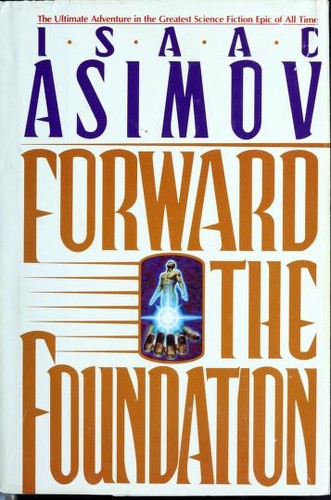
Isaac Asimov
During the whole Foundation series, one man has always had his hand in the development of a galaxy. Merely hinted at in previous books, visited off and on for historical background - finally here delved into as deep as one can go - the demystified Hari Seldon. This follows about 40 years of his life, and traces his progress in the development of Psychohistory - the pseudo-mathematical science that would one day save the galaxy. If you have read the Foundation series, either in it's entirety or just pieces, this is a must read. It also (if memory serves) is the last book Asimov wrote before his death - the final pages describing Hari Seldon's final moments of life mirroring his own. A truly beautiful read.

Isaac Asimov
One of the great masterworks of science fiction, the Foundation novels of Isaac Asimov are unsurpassed for their unique blend of nonstop action, daring ideas, and extensive world-building. The story of our future begins with the history of Foundation and its greatest psychohistorian: Hari Seldon. For twelve thousand years the Galactic Empire has ruled supreme. Now it is dying. Only Hari Seldon, creator of the revolutionary science of psychohistory, can see into the future--a dark age of ignorance, barbarism, and warfare that will last thirty thousand years. To preserve knowledge and save mankind, Seldon gathers the best minds in the Empire--both scientists and scholars--and brings them to a bleak planet at the edge of the Galaxy to serve as a beacon of hope for future generations. He calls his sanctuary the Foundation. But soon the fledgling Foundation finds itself at the mercy of corrupt warlords rising in the wake of the receding Empire. And mankind's last best hope is faced with an agonizing choice: submit to the barbarians and live as slaves--or take a stand for freedom and risk total destruction.


Isaac Asimov
Led by its founding father, the great psychohistorian Hari Seldon, and taking advantage of its superior science and technology, the Foundation has survived the greed and barbarism of its neighboring warrior-planets. Yet now it must face the Empire still the mightiest force in the Galaxy even in its death throes. When an ambitious general determined to restore the Empire's glory turns the vast Imperial fleet toward the Foundation, the only hope for the small planet of scholars and scientists lies in the prophecies of Hari Seldon.
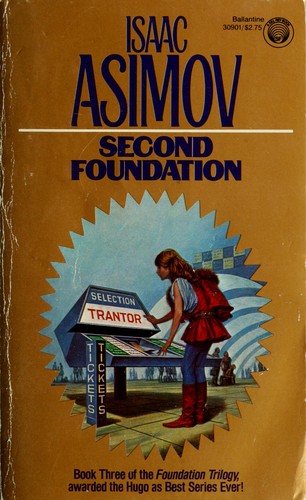
Isaac Asimov
After years of struggle, the Foundation lay in ruins -- destroyed by the mutant mind power of the Mule. But it was rumored that there was a Second Foundation hidden somewhere at the end of the Galaxy, established to preserve the knowledge of mankind through the long centuries of barbarism. The Mule had failed to find it the first time -- but now he was certain he knew where it lay. The fate of the Foundation rests on young Arkady Darell, only fourteen years old and burdened with a terrible secret. As its scientists girded for a final showdown with the Mule, the survivors of the First Foundation began their desperate search. They too wanted the Second Foundation destroyed... before it destroyed them.

Isaac Asimov
After the defeat of the Mule by the Second Foundation, Terminus enjoys a period of prosperity and stability which is publicly attributed to the Seldon Plan, but which some feel is the work of the Second Foundation. A search is begun to determine if the Second Foundation still exists. Meanwhile, the Second Foundation finds that there is evidence of an independent force acting against the Mule to protect the Seldon Plan. A search is launched to determine what this force is and if it is a threat. The end result is a search for Earth (Terminus being the last planet settled by the galactic empire and Earth being the metaphoric opposite of first human planet settled). A final three way confrontation results in a fateful decision and an open question.
Benzer Listeler

Ölmeden Önce Okunması Gereken Kitaplar
Yüzüklerin Efendisi Kronolojik Okuma Rehberi
Dune Okuma Sırası
MCU Chronological Order


Star Wars Chronological Order


Kötü Bölümü Olmayan Diziler

Avatar: The last Airbender Chronological Order

2026 Sonbahar Sezonunun Yaklaşan Dizileri


TV Tarihinin En Etkileyici Sona Sahip Dizi Finalleri


TV Tarihinin En Etkileyici Sona Sahip Dizi Finalleri
Alien: Kronolojik Sıra
Karanlık Dosyalar: Son Yılların Dikkat Çeken Polisiye Dizileri
We're scared this year!
