

J.R.R. Tolkien, Christopher Tolkien
The story begins with a man named Eriol, as he lands on the 'Lonely Island' mythical prehistory England. While traveling he stops at the "Cottage of Lost Play" a house owned by Lindo and Vairë elves. They tell him how they came to be there, and of a place called the 'Cottage of Children', a place where Children that had gotten lost in the woods could stay. Its caretaker left and the cottage was rediscovered by Lindo's father, and he took the children to this island, with him, and now Lindo looks after them. The next day Eriol walks in the garden and meets the door man, and is told the story of "The Music of the Ainur". A creation myth where the creator sings into being immortal spirits, that with their help sing into being the world. One of these spirits becomes evil, and begins to dislike the two races that are placed within the world, Elves and Men. Some of the spirits decided to be caretakers for the world and broke up into two groups the Valor, care takers and the Maia, servants to them. That night he asks to hear more stories, and is told "The Coming of Valor and the Building of Valinor". the care takers have their own parts of the world, but eventually get together and create a can all live in the world. They placed it on the war West of the world and they call it Valinor, all but the evil one decided to live there, he made his home in the mountains of the north. Eriol soon wishes to stay on the island, but must get the queen's permission, but she tells him he must learn more about them first. She then tells him of "The Chaining of Melko". It tells how the evil one tried to destroy that which the other Valor created and how subdued him and put him on trial for his crimes. Eriol then asks about the elves and is told "The Coming of the Elves and the Making of Kôr." Near the end of the evil ones imprisonment the Elves came into being, and seeing them, the Valor requested to talk with them, but only three came to Valinor, of these three the original three tribes of Elves grew, of these many returned and built the city Kôr near Valinor. Here the magic Silmarillion jewels. The queen ends her story, and Eriol returns to Lindo's house, where at story time Lindo tells "The Theft of Melko and the Darkening of Valinor" This tells how the evil one causes distrust between the elves and the Valor, then while the elves are at Valinor the three Silmarils. He hides in a cave and meets a spider woman that offers to help him, and together they go to Valinor, and destroy the two Trees of Light, they are almost caught but manage to escape, with the help of the spider woman's power to cause darkness. The story continues without a break, but with a new title "The Flight of the Noldoli". One of the groups of elves gets restless after helping hunt for the evil one, they feel ill used and steal boats from another group, they become exiles and escape to the East and to the continent. Some time later a guest arrives and Lindo tells "The Tale of the Sun and Moon". It tells that after Valinor was darkened, they cried over the trees which made bloom one last fruit, it shined brightly and they placed it in the sky. One of the valor sing to the other tree and then touch it as it brings a blossom of a fruit but it is dropped and the fruit doesn't shine as brightly, they place it in the sky also, where they will now be the moon and sun. Lindo asks his wife to tell the next story which is, "The Hiding of Valinor" This tells how the valor feared evil would return so they destroy all roads leading to Valinor, and the only way for the elves to reach there is by a bridge rainbow, that is really the hair of a Valor. Then three strangers come to Valinor and they asked to take hold of the sun, and moon, and with a cord they bind them together, and create the days, months and years. They then introduce themselves as the sons of time. Time passes and the new guest to the cottage is asked to tell a story, he then tells, "Gilfanon's Tale: The Travail of the Noldoli and the Coming of Mankind". The story starts with elves that did not go to Valinor but stayed where they awakened, they were taught forbidden things by a wizard. They found men sleeping in caves and woke them up. At first they were friends by the evil one sent messengers to make men and elves hate, a war broke out, and men where beaten and driven away. They get together with the Noldoli who left Valinor, and try to fight the evil one but lose and some are turned into slaves while the two groups of elves learn to distrust each other. The new guest's story ends and he leaves, while Eriol remains at Lindo's for a while longer. The story continues in "The Book of Lost Tales: Part II".
J. R. R. Tolkien
The second of a two-book set that contains the early myths and legends which led to the writing of Tolkien's epic tale of war, The Silmarillion. This second part of The Book of Lost Tales includes the tale of Beren and Lúthien, Túrin and the Dragon, and the only full narratives of the Necklace of the Dwarves and the Fall of Gondolin, itself the finest and most exciting depiction of a battle that Tolkien ever wrote. Each tale is followed by a commentary in the form of a short essay, together with texts of associated poems, and contains extensive information on names and vocabulary in the earliest Elvish languages. HarperCollins are delighted to publish this classic in ebook format for the first time.

J.R.R. Tolkien, Christopher Tolkien
The Silmarillion is an account of the Elder Days, of the First Age of Tolkien’s world. It is the ancient drama to which the characters in The Lord of the Rings look back, and in whose events some of them such as Elrond and Galadriel took part. The tales of The Silmarillion are set in an age when Morgoth, the first Dark Lord, dwelt in Middle-Earth, and the High Elves made war upon him for the recovery of the Silmarils, the jewels containing the pure light of Valinor. Included in the book are several shorter works. The Ainulindale is a myth of the Creation and in the Valaquenta the nature and powers of each of the gods is described. The Akallabeth recounts the downfall of the great island kingdom of Númenor at the end of the Second Age and Of the Rings of Power tells of the great events at the end of the Third Age, as narrated in The Lord of the Rings.

J.R.R. Tolkien, Christopher Tolkien
This is the third volume of the History of Middle-earth, which comprises here-tofore unpublished manuscripts that were written over a period of many years before Tolkien's Simlarillion was published. Volumes 1 and 2 were the Book of Lost Tales, Part One and The Book of Lost Tales, Part Two. Together, these volumes encompass an extraordinarily extensive body of material ornamenting and buttressing what must be the most fully realized world ever to spring from a single author's imagination. "I write alliterative verse with pleasure," wrote J.R.R. Tolkien in 1955, "though I have published little beyond the fragments in The Lord of the Rings, except The Homecoming of Beorhtnoth." The first of the poems in The Lays of Beleriand is the previously unpublished Lay of the Children of Hurin, his early but most sustained work in the ancient English meter, intended to narrate on a grand scale the tragedy of Turin Turambar. It was account of the killing by Turin of his friend Beleg, as well as a unique description of the great redoubt of Nargothrond. The Lay of the Children of Hurin was supplanted by the Lay of Leithian, "Release from Bondage", in which another major legend of the Elder Days received poetic form, in this case in rhyme. The chief source of the short prose tale of Beren and Luthien is The Silmarillion. This, too, was not completed, but the whole Quest of the Silmaril is told, and the poem breaks off only after the encounter with Morgoth in his subterranean fortress. Many years later, when The Lord of the rings was finished, J.R.R. Tolkien returned to the Lay of Leithian and started on a new version, which is also given in this book. Accompanying the poems are commentaries on the evolution of the history of the Elder Days, which was much developed during the years of the composition of the two Lays. Also included is the notable criticism in detail of the Lay of Lethian by C.S. Lewis, Tolkien's friend and colleague, who read the poem in 1929. By assuming that this poem is actually a fragment from a past lost in history, Lewis underlined the remarkable power of its author's imaginative talents and academic competence.
J.R.R. Tolkien, Christopher Tolkien
詩と散文、地図と丸太、曲がりくねり、中つ国への旅......クリストファー・トールキンは故父J.R.からアーカイブ資料を収集しました。トールキンはそれらを用いて古典物語の世界と歴史を創造せざるを得ませんでした。『中つ国の歴史』第4巻には、 創世神話からモルゴスの滅亡まで、初期の物語の古代版が収められています。これらの記録は、バレランドの出来事の歴史、最初の『シルマリルの物語』の地図、そして中つ国の物理的本質を示す唯一の既知の証拠を示しています。 『中つ国の創造』は、中つ国の初期神話の進化をたどる強力な枠組みを提供します。この本は、この永遠に愛される国の過去を理解する者にとって欠かせない参考書であり、彼らの世界に没頭したい人にとって素晴らしい読み物です。

J.R.R. Tolkien, Christopher Tolkien
At the end of the 1937 J.R.R. Tolkien reluctantly set aside his now greatly elaborated work on the myths and heroic legends of Valinor and Middle-earth and began The Lord of the Rings. This fifth volume of The History of Middle-earth, edited by Christopher Tolkien, completes the presentation of the whole compass of his writing on those themes up to that time. Later forms of the Annuals of Valinor and the Annals of Berleriand had been composed, The Silmarillion was nearing completion in a greatly amplified version, and a new map had been made; the myth of the Music of the Ainur had become a separate work; and the legend of the Downfall of Numenor had already entered in a primitive form, introducing the cardinal ideas of the World Made Round and the Straight Path into the vanished West. Closely associated with this was the abandoned time-travel story, The Lost Road, which was to link the world of Numenor and Middle-earth with the legends of many other times and peoples. A long essay, The Lhammas, had been written on the ever more complex relations of the languages and dialects of Middle-earth; and an etymological dictionary had been undertaken, in which a great number of words and names in the Elvish languages were registered and their formation explained - thus providing by far the most extensive account of their vocabularies that has appeared.
J. R. R. Tolkien
Painstakingly restored from Tolkien's manuscripts and presented for the first time as a continuous and standalone story, the epic tale of Beren and Lúthien will reunite fans of The Hobbit and The Lord of the Rings with Elves and Men, Dwarves and Orcs and the rich landscape and creatures unique to Tolkien's Middle-earth. The tale of Beren and Lúthien was, or became, an essential element in the evolution of The Silmarillion, the myths and legends of the First Age of the World conceived by J.R.R. Tolkien. Returning from France and the battle of the Somme at the end of 1916, he wrote the tale in the following year. Essential to the story, and never changed, is the fate that shadowed the love of Beren and Lúthien: for Beren was a mortal man, but Lúthien was an immortal Elf. Her father, a great Elvish lord, in deep opposition to Beren, imposed on him an impossible task that he must perform before he might wed Lúthien. This is the kernel of the legend; and it leads to the supremely heroic attempt of Beren and Lúthien together to rob the greatest of all evil beings, Melkor, called Morgoth, the Black Enemy, of a Silmaril. In this book Christopher Tolkien has attempted to extract the story of Beren and Lúthien from the comprehensive work in which it was embedded; but that story was itself changing as it developed new associations within the larger history. To show something of the process whereby this legend of Middle-earth evolved over the years, he has told the story in his father's own words by giving, first, its original form, and then passages in prose and verse from later texts that illustrate the narrative as it changed. Presented together for the first time, they reveal aspects of the story, both in event and in narrative immediacy, that were afterwards lost.
J.R.R. Tolkien
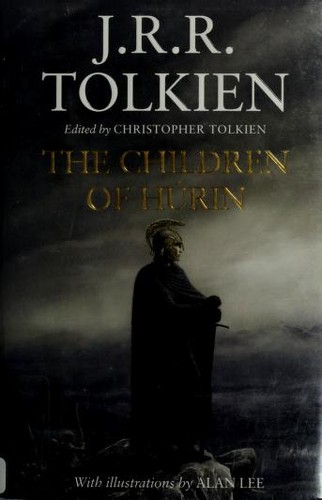
The ‘Great Tale’ of The Children of Húrin, set during the legendary time before The Lord of the Rings. Morgoth, the first Dark Lord, dwells in the vast fortress of Angband in the North; and within the shadow of the fear of Angband, and the war waged by Morgoth against the Elves, the fates of Turin and his sister Nienor will be tragically entwined. Their brief and passionate lives are dominated by the elemental hatred that Morgoth bears them as the children of Hurin, the man who dared to defy him to his face. Against them Morgoth sends his most formidable servant, Glaurung, a powerful spirit in the form of a huge wingless dragon of fire. Sardonic and mocking, Glaurung manipulates the fates of Turin and Nienor by lies of diabolic cunning and guile, in an attempt to fulfil the curse of Morgoth.

J.R.R. Tolkien, Christopher Tolkien, Alan Lee
"In the Tale of The Fall of Gondolin are two of the greatest powers in the world. There is Morgoth of the uttermost evil, unseen in this story but ruling over a vast military power from his fortress of Angband. Deeply opposed to Morgoth is Ulmo, second in might only to Manwë, chief of the Valar: he is called the Lord of Waters, of all seas, lakes, and rivers under the sky. But he works in secret in Middle-earth to support the Noldor, the kindred of the Elves among whom were numbered Húrin and Túrin Turambar. Central to this enmity of the gods is the city of Gondolin, beautiful but undiscoverable. It was built and peopled by Noldorin Elves who, when they dwelt in Valinor, the land of the gods, rebelled against their rule and fled to Middle-earth. Turgon King of Gondolin is hated and feared above all his enemies by Morgoth, who seeks in vain to discover the marvellously hidden city, while the gods in Valinor in heated debate largely refuse to intervene in support of Ulmo's desires and designs. Into this world comes Tuor, cousin of Túrin, the instrument of Ulmo's designs. Guided unseen by him Tuor sets out from the land of his birth on the fearful journey to Gondolin, and in one of the most arresting moments in the history of Middle-earth the sea-god himself appears to him, rising out of the ocean in the midst of a storm. In Gondolin he becomes great; he is wedded to Idril, Turgon's daughter, and their son is Eärendel, whose birth and profound importance in days to come is foreseen by Ulmo. At last comes the terrible ending. Morgoth learns through an act of supreme treachery all that he needs to mount a devastating attack on the city, with Balrogs and dragons and numberless Orcs. After a minutely observed account of the fall of Gondolin, the tale ends with the escape of Túrin and Idril, with the child Eärendel, looking back from a cleft in the mountains as they flee southward, at the blazing wreckage of their city. They were journeying into a new story, the Tale of Eärendel, which Tolkien never wrote, but which is sketched out in this book from other sources. Following his presentation of Beren and Lúthien Christopher Tolkien has used the same 'history in sequence' mode in the writing of this edition of The Fall of Gondolin. In the words of J.R.R. Tolkien, it was 'the first real story of this imaginary world' and, together with Beren and Lúthien and The Children of Húrin, he regarded it as one of the three 'Great Tales' of the Elder Days." - Amazon.com

J.R.R. Tolkien, Christopher Tolkien
In Morgoth's Ring, the tenth volume of The History of Middle-earth and the first of two companion volumes, Christopher Tolkien describes and documents the legends of the Elder Days, as they were evolved and transformed by his father in the years before he completed The Lord of the Rings. The text of the Annals of Aman, the "Blessed Land" in the far West, is given in full. And in writings never before published, we can see the nature of the problems that J.R.R. Tolkien explored in his later years as new and radical ideas, portending upheaval in the heart of the mythology. At this time Tokien sought to redefine the old legends, and wrote of the nature and destiny of Elves, the idea of Elvish rebirth, the origins of the Orcs, and the Fall of Men. His meditation of mortality and immortality as represented in the lives of Men and Elves led to another major writing at this time, the "Debate of Finrod and Andreth," which is reproduced here in full. "Above all," Christopher Tolkien writes in his foreward, "the power and significance of Melkor-Morgoth...was enlarged to become the ground and source of the corruption of Arda." This book indeed is all about Morgoth. Incomparably greater than the power of Sauron, concentrated in the One Ring, Morgoth's power (Tolkien wrote) was dispersed into the very matter of Arda: "The whole of Middle-earth was Morgoth's Ring."

J.R.R. Tolkien, Christopher Tolkien
In 'The War of the Jewels' Christopher Tolkien takes up his account of the later history of 'The Silmarillion' from the point where it was left in 'Morgoth's Ring'. The story now returns to Middle-earth, and the ruinous conflict of the High Elves and the Men who were their allies with the power of the Dark Lord. With the publication of this book all J. R. R. Tolkien's later narrative writing concerned with the last centuries of the First Age, the long history of 'The Silmarillion', from it's beginning in 'The Book of Lost Tales', is completed; and the enigmatic state of the work at his death can be understood. The book contains the full text of the Grey Annals, the primary record of the War of the Jewels, and a major story of Middle-earth now published for the first time: the tale of the disaster that overtook the forest people of Brethil when Hurin the Steadfast came among them after his release from long years of captivity in Angband, the fortress of Morgoth. "One marvels anew at the depth, breadth, and persistence of J. R. R Tolkien's labour. No one sympathetic to his aims, the invention of a secondary universe, will want to miss this chance to be present at the creation." 'Publishers Weekly'

J.R.R. Tolkien, Christopher Tolkien
Unfinished Tales is a collection of narratives ranging in time from the Elder Days of Middle-earth to the end of the War of the Ring, and provides those who have read The Lord of the Rings with a whole collection of background and new stories from the twentieth century’s most acclaimed popular author. The book concentrates on the realm of Middle-earth and comprises such elements as Gandalf’s lively account of how it was that he came to send the Dwarves to the celebrated party at Bag-End, the emergence of the sea-god Ulmo before the eyes of Tuor on the coast of Beleriand, and an exact description of the military organization of the Riders of Rohan. Unfinished Tales also contains the only story about the long ages of Numenor before its downfall, and all that is known about such matters as the Five Wizards, the Palantiri and the legend of Amroth. The tales were collated and edited by JRR Tolkien’s son and literary heir, Christopher Tolkien, who provides a short commentary on each story, helping the reader to fill in the gaps and put each story into the context of the rest of his father’s writings.

J.R.R. Tolkien
J.R.R. Tolkien famously described the Second Age of Middle-earth as a "dark age, and not very much of its history is (or need be) told." And for many years readers would need to be content with the tantalizing glimpses of it found within the pages of The Lord of the Rings and its appendices, including the forging of the Rings of Power, the building of the Barad-dûr and the rise of Sauron. It was not until Christopher Tolkien published The Silmarillion after his father’s death that a fuller story could be told. Although much of the book’s content concerned the First Age of Middle-earth, there were at its close two key works that revealed the tumultuous events concerning the rise and fall of the island of Númenor. Raised out of the Great Sea and gifted to the Men of Middle-earth as a reward for aiding the angelic Valar and the Elves in the defeat and capture of the Dark Lord Morgoth, the kingdom became a seat of influence and wealth; but as the Númenóreans’ power increased, the seed of their downfall would inevitably be sown, culminating in the Last Alliance of Elves and Men. Even greater insight into the Second Age would be revealed in subsequent publications, first in Unfinished Tales of Númenor and Middle-earth, then expanded upon in Christopher Tolkien’s magisterial twelve-volume The History of Middle-earth, in which he presented and discussed a wealth of further tales written by his father, many in draft form. Now, adhering to the timeline of "The Tale of Years" in the appendices to The Lord of the Rings, editor Brian Sibley has assembled into one comprehensive volume a new chronicle of the Second Age of Middle-earth, told substantially in the words of Tolkien from the various published texts, with new illustrations in watercolor and pencil by the doyen of Tolkien art, Alan Lee.
J.R.R. Tolkien
This beautiful gift edition of The Hobbit, J.R.R. Tolkien's classic prelude to his Lord of the Rings trilogy, features cover art, illustrations, and watercolor paintings by the artist Alan Lee. Bilbo Baggins is a hobbit who enjoys a comfortable, unambitious life, rarely traveling any farther than his pantry or cellar. But his contentment is disturbed when the wizard Gandalf and a company of dwarves arrive on his doorstep one day to whisk him away on an epic adventure. They have launched a plot to raid the treasure hoard guarded by Smaug the Magnificent, a large and very dangerous dragon. Bilbo reluctantly joins their epic quest, unaware that on his journey to the Lonely Mountain he will encounter both a magic ring and a frightening creature known as Gollum. Written for J.R.R. Tolkien's own children, The Hobbit has sold many millions of copies worldwide and established itself as a modern classic of fantasy literature.

J.R.R. Tolkien, Christopher Tolkien
The Return of the Shadow is the first volume of the The History of The Lord of the Rings and the sixth volume of The History of Middle-earth. It is a history of the creation of The Lord of the Rings, a fascinating study of Tolkien's great masterpiece, from its inception to the end of the first volume, The Fellowship of the Ring. In The Return of the Shadow (the abandoned title of the first volume of The Lord of the Rings) Christopher Tolkien describes, with full citation of the earliest notes, outline plans, and narrative drafts, the intricate evolution of The Fellowship of the Ring and the gradual emergence of the conceptions that transformed what J.R.R. Tolkien for long believed would be a far shorter book, 'a sequel to The Hobbit'. The enlargement of Bilbo's 'magic ring' into the supremely potent and dangerous Ruling Ring of the Dark Lord is traced and the precise moment is seen when, in an astonishing and unforeseen leap in the earliest narrative, a Black Rider first rode into the Shire, his significance still unknown. The character of the hobbit called Trotter (afterwards Strider or Aragorn) is developed while his indentity remains an absolute puzzle, and the suspicion only very slowly becomes certainty that he must after all be a Man. The hobbits, Frodo's companions, undergo intricate permutations of name and personality, and other major figures appear in strange modes: a sinister Treebeard, in league with the Enemy, a ferocious and malevolent Farmer Maggot. The story in this book ends at the point where J.R.R. Tolkien halted in the story for a long time, as the Company of the Ring, still lacking Legolas and Gimli, stood before the tomb of Balin in the Mines of Moria. The Return of the Shadow is illustrated with reproductions of the first maps and notable pages from the earliest manuscripts.

J.R.R. Tolkien, Christopher Tolkien
The Treason of Isengard is the second volume of The History of The Lord of the Rings and the seventh volume of The History of Middle-earth. The Treason of Isengard continues the account of the creation of The Lord of the Rings started in the earlier volume, The Return of the Shadow. In this book, following the long halt in the darkness of the Mines of Moria with which The Return of the Shadow ended, is traced the great expansion of the tale into new lands and new peoples south and east of the Misty Mountains; the emergence of Lothlorien, of Ents, of the Riders of Rohan, and of Saruman the White in the fortress of Isengard. In brief outlines and penciled drafts dashed down on scraps of paper are seen the first entry of Galadriel, the earliest ideas of the history of Gondor, the original meeting of Aragorn and Eowyn, its significance destined to be wholly transformed. Conceptions of what lay ahead are seen dissolving as the story took its own paths, as in the account of the capture of Frodo and his rescue by Sam Gamgee from Minas Morgul, written long before J.R.R. Tolkien actually came to that point in the writing of The Lord of the Rings. A chief feature of the book is a full account of the original Map, with re-drawings of successive phases, which was long the basis and accompaniment of the emerging geography of Middle-earth. An appendix to the book describes the Runic alphabets as they were at that time, with illustrations of the forms and an analysis of the Runes used in the Book of Mazarbul found beside Balin's Tomb in Moria.

J.R.R. Tolkien, Christopher Tolkien
The War of the Ring is the third volume of The History of The Lord of the Rings and the eighth volume in The History of Middle-earth. The War of the Ring takes up the story of The Lord of the Rings with the Battle of the Hornburg and the drowning of Isengard by the Ents, continues with the journey of Frodo, Sam and Gollum to the Pass of Cirith Ungol, describes the war in Gondor, and ends with the parley between Gandalf and the ambassador of the Dark Lord before the Black Gate of Mordor. In describing his intentions for The Return of the King, J.R.R. Tolkien said that 'It will probably work out very differently from this plan when it really gets written, as the thing seems to write itself once it gets going'; and in The War of the Ring totally unforeseen developments that would become central to the narrative are seen at the moment of their emergence: the palantir bursting into fragments on the stairs of Orthanc, its nature as unknown to the author as to those who saw it fall, or the entry of Faramir into the story ('I am sure I did not invent him, though I like him, but there he came walking into the woods of Ithilien'). The book is illustrated with plans and drawings of the changing conceptions of Orthanc, Dunharrow, Minas Tirith and the tunnels of Shelob's Lair.

J.R.R. Tolkien, Christopher Tolkien
In the first part of Sauron Defeated, Christopher Tolkien completes his account of the writing of The Lord of the Rings, beginning with Sam's rescue of Frodo from the Tower of Kirith Ungol, and giving a very different account of the Scouring of the Shire. This part ends with versions of the previously unpublished Epilogue, an alternate ending to the masterpiece in which Sam attempts to answer his children's questions years after the departure of Bilbo and Frodo from the Grey Havens. The second part introduces The Notion Club Papers, now published for the first time. Written by J.R.R. Tolkien in the interval between The Two Towers and The Return of the King (1945-1946), these mysterious Papers, discovered in the early years of the twenty-first century, report the discussions of a literary club in Oxford in the years 1986-1987. Those familiar with the Inklings will see a parallel with the group whose members included J.R.R. Tolkien and C.S. Lewis. After a discussion of the possiblities of travel through space and time through the medium of 'true dream," the story turns to the legend of Atlantis, the strange communications received by members of the club out of remote past, and the violent irruption of the legend into northwestern Europe. Closely associated with the Papers is a new version of the Numenorean legend, The Drowning of Anadune, which constitutes the third part of the book. At this time the language of the Men of the West, Adunaic, was first devised - Tolkien's fifteenth invented language. The book concludes with an elaborate account of the structure of this language by Arundel Lowdham, a member of the Notion Club, who learned it in his dreams. Sauron Defeated is illustrated with the changing conceptions of the fortress of Kirith Ungol and Mount Doom, previously unpublished drawings of Orthanc and Dunharrow, and fragments of manuscript written in Numenorean script.

J.R.R. Tolkien
In ancient times the Rings of Power were crafted by the Elven-smiths, and Sauron, the Dark Lord, forged the One Ring, filling it with his own power so that he could rule all others. But the One Ring was taken from him, and though he sought it throughout Middle-earth, it remained lost to him. After many ages it fell into the hands of Bilbo Baggins, as told in The Hobbit. In a sleepy village in the Shire, young Frodo Baggins finds himself faced with an immense task, as his elderly cousin Bilbo entrusts the Ring to his care. Frodo must leave his home and make a perilous journey across Middle-earth to the Cracks of Doom, there to destroy the Ring and foil the Dark Lord in his evil purpose.
J.R.R. Tolkien
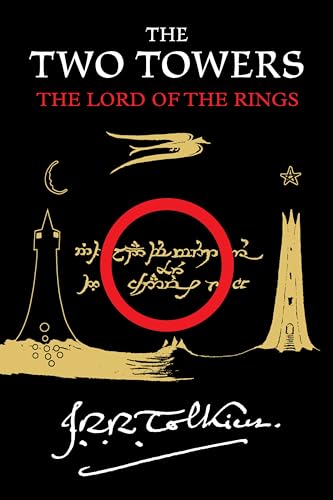
Frodo and his Companions of the Ring have been beset by danger during their quest to prevent the Ruling Ring from falling into the hands of the Dark Lord by destroying it in the Cracks of Doom. They lost the wizard Gandalf in the Mines of Moria. And Boromir, seduced by the power of the Ring, tried to seize it by force. While Frodo and Sam made their escape, the rest of the company was attacked by Orcs. Now they continue their journey alone down the great River Anduin—alone, that is, save for the mysterious creeping figure that follows wherever they go.

J.R.R. Tolkien
As the shadow of Mordor grows across the land, the Companions of the Ring have become involved in separate adventures. Aragorn, revealed as the hidden heir of the ancient Kings of the West, has joined with the Riders of Rohan against the forces of Isengard and takes part in the desperate battle of the Hornburg. Merry and Pippin, captured by Orcs, escape into Fangorn Forest and there encounter the Ents. Gandalf has miraculously returned and defeated the evil wizard, Saruman. Sam has left his master for dead after a battle with the giant spider, Shelob; but Frodo is still alive—now in the foul hands of the Orcs. Meanwhile, the armies of the Dark Lord are massing as the One Ring draws ever nearer to the Cracks of Doom.

J.R.R. Tolkien, Christopher Tolkien
Study of the Appendices to "The Lord of the Rings," which contain the historical structure of the Second and Third Ages, with additional writings from Tolkien's later years offering new insights into his fictional world, and the abandoned beginnings of two other stories.

J.R.R. Tolkien
« Les Aventures de Tom Bombadil est un recueil de poèmes de J. R. R. Tolkien paru en 1962. Il se compose de seize poèmes, dont seuls les deux premiers ont véritablement à voir avec le personnage de Tom Bombadil. L'ensemble forme une collection hétéroclite où l'humour léger (« Le Troll de pierre », « Fastitocalon ») et les jeux sur les sonorités (« Errance », « Chat ») côtoient des vers plus sombres et mélancoliques (« La Cloche marine », « Le Dernier Vaisseau »). » --
Benzer Listeler

Ölmeden Önce Okunması Gereken Kitaplar

Eksiksiz Asimov Evreni: Kronolojik Okuma Sırası

Dune Okuma Sırası
MCU Chronological Order


Star Wars Chronological Order


Kötü Bölümü Olmayan Diziler

Avatar: The last Airbender Chronological Order

2026 Sonbahar Sezonunun Yaklaşan Dizileri


TV Tarihinin En Etkileyici Sona Sahip Dizi Finalleri


TV Tarihinin En Etkileyici Sona Sahip Dizi Finalleri
Alien: Kronolojik Sıra

Karanlık Dosyalar: Son Yılların Dikkat Çeken Polisiye Dizileri
We're scared this year!
